 DVRx-1 DVRx-11개의 Composite 입력과 출력을 가지고 있는 Video Amplifier DC - 40 MHz (-3dB), GAIN 조절 가능, EQ 조정가능 입력 : Composite 출력 : Composite 전원 : 12-24V AC/DC Power (포함) 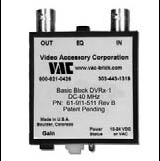 DVRx-1 Video Amplifier, single output (1X1); Epoxy encapsulated Video Brick® Each DA has: - Differential 75 Ohm input (BNC) - One active 75 Ohm output (BNC) - Adjustable Gain 0.75X to 1.5X - Adjustable EQ - AC coupled input - DC Restore circuitry eliminates DC offset - DC coupling on outputs - 40 MHz bandwidth (-3 dB) - 0.5-2.0 Vpp input signal range - +/- 8V input offset voltage range - Output current drive > 20 mA Size: 2.2" x 2.2" x 0.65" (Figure A, pg. 69) Power*: 12-24V AC/DC Operating Temp: -40 to 50C DVRx Converting analog composite video to digital video has become commonplace in security, presentation, and broadcast systems. Regardless of the application, an optimized analog video input is essential for efficient and accurate A/D conversion. The DVRx* product line is specifically designed to provide reliable, easy-to-use, and accurate analog video optimization. Quickly set composite video to RS-170A (NTSC) specifications with the DVRx to ensure optimal A/D converter performance. The results can be impressive: Smaller file sizes, less distortion, and improved resolution. Essential for DVR Applications Unlike an video tape recorder, which simply records the incoming signal to tape, a DVR must first convert the analog signal to a digital format. When the analog video doesn’t meet the RS-170A specification – either due to transmission line losses, noise, interference, or DC voltages riding on the signal – the A/D conversion process may generate errors that significantly degrade DVR performance. Problems can include erratic recording, false motion detection, and moderate to sever distortion to the video picture. VAC’s DVRx can optimize the analog signal to significantly reduce and typically eliminate many of the problems that cause poor DVR performance. DVRx Features • Differential (“humbucking”) 75Ohm input mitigates ground loop interference • Adjustable gain and EQ compensates for cable losses or low signal levels from the video source • AC coupling on the input eliminates DC offsets • DX Restore circuitry provides correct voltage references to ensure outputs meet RS-170A spec • 40 MHz bandwidth is more than sufficient for NTSC quality video * Patent Pending |
 |